Borobudur
Borobudur, Magelang Regency, Central Java, Indonesia
About
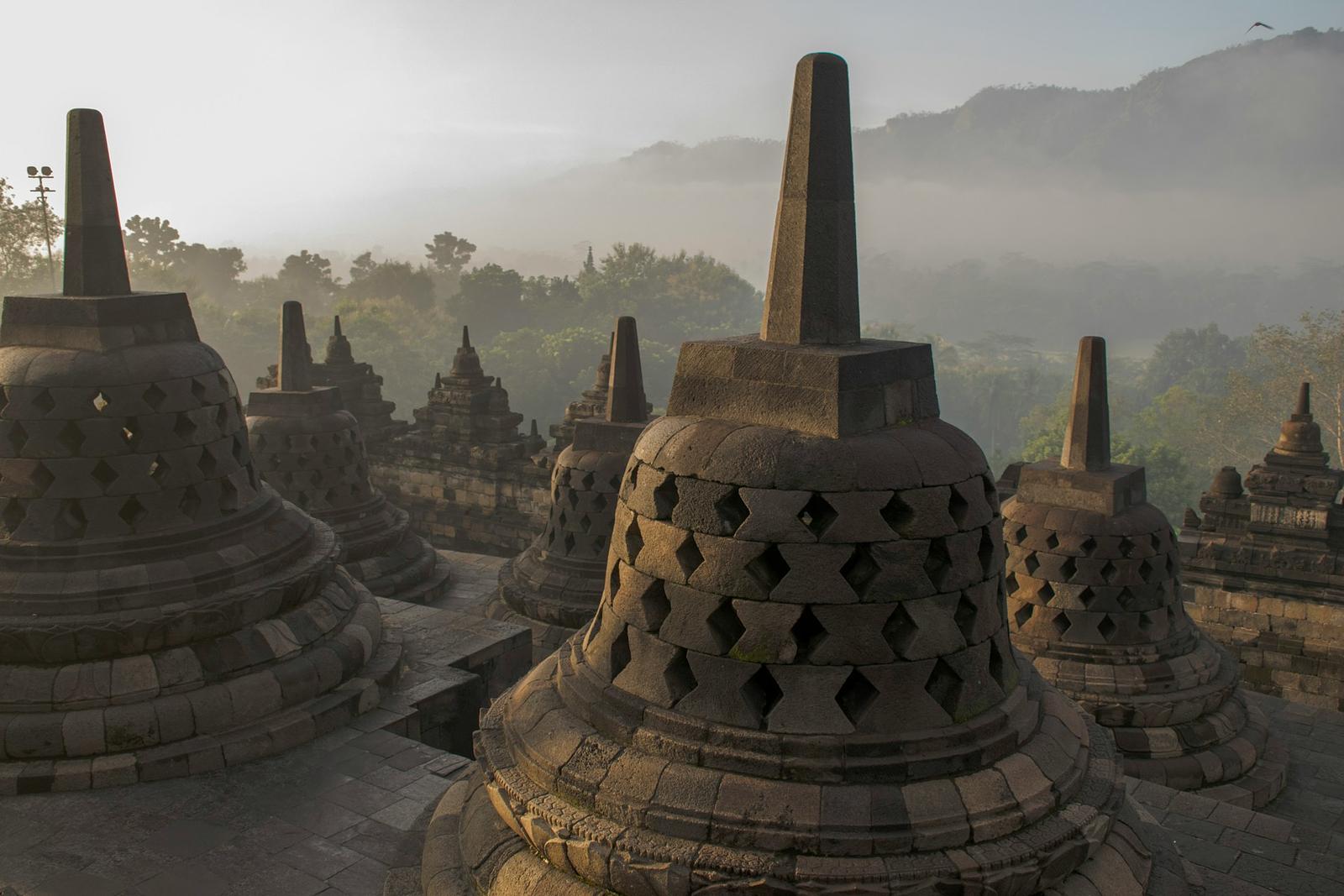
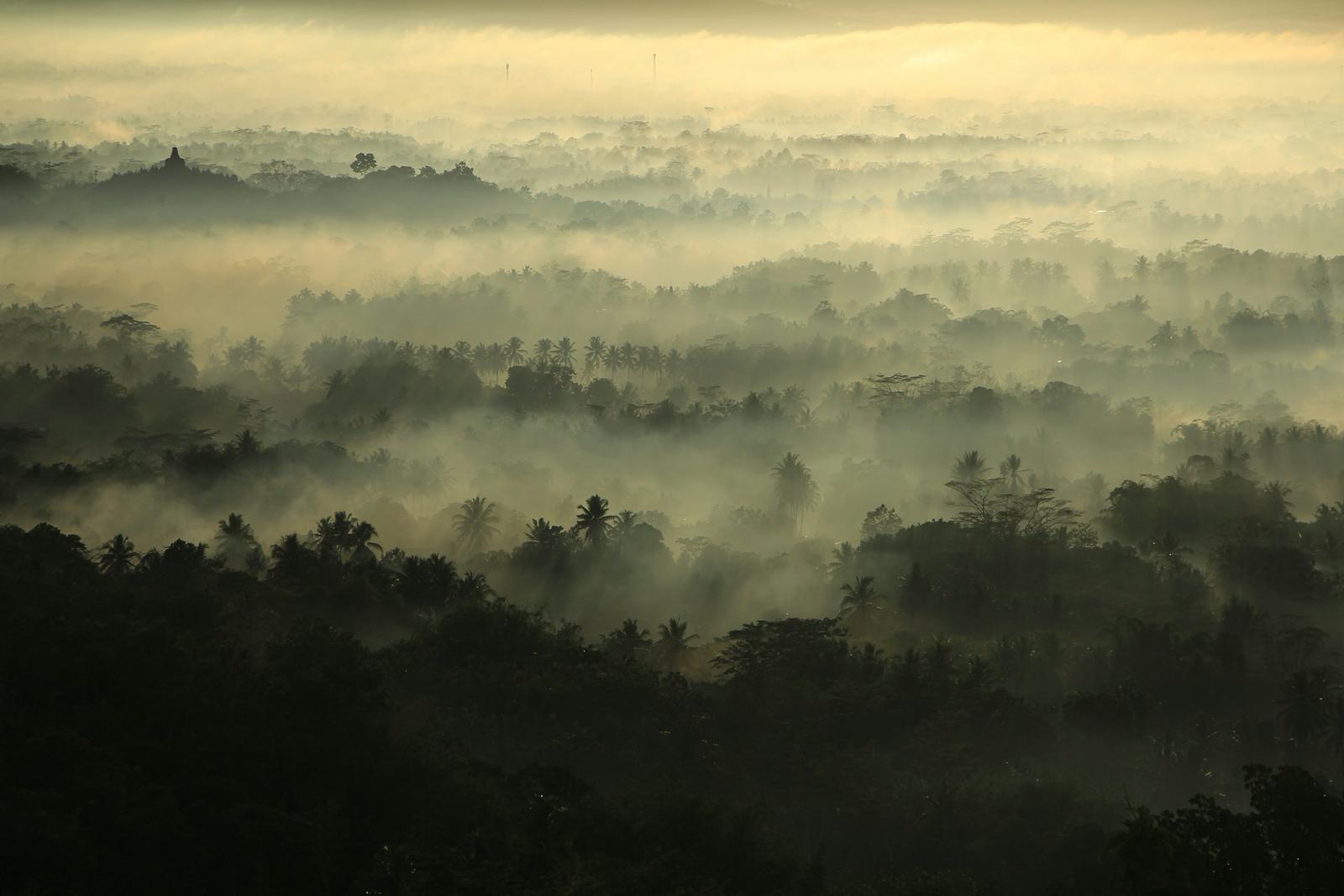
Arrive early, before the heat starts negotiating with your patience. Central Java is still soft at that hour: birds in the trees, the plain waking up, volcanoes in the distance, and then Borobudur, not rising like a palace but like a dark stone hill turned into a map of the mind. Begin low and go clockwise. Resist the urge to race to the view, because Borobudur starts deliberately in the human mess. Its base represents Kamadhatu, the world of desire, where actions have consequences and karma keeps the accounts with uncomfortable precision. Even the famous hidden foot, mostly covered today, carries scenes of moral cause and effect: greed, gossip, punishment, reward. Sacred architecture, yes. But also a remarkably accurate archive of people behaving exactly as people tend to behave. Keep climbing. The square terraces bring you into Rupadhatu, the world of forms. Here the monument is at its most talkative. Reliefs show ships, palaces, animals, servants, Buddhist stories and everyday Javanese life, all carved into volcanic stone. You are still surrounded by bodies, gestures, lessons and movement, but the rhythm has changed. You read with your feet, turning corner after corner, slowly accepting that Borobudur is not built to be consumed quickly. Then, almost without drama, the monument starts removing things. The walls loosen. The carved stories fall away. The square terraces become circular. You have entered Arupadhatu, the formless world, and the architecture suddenly understands silence. Around the central dome stand 72 bell shaped stupas, each holding a seated Buddha behind patterned stone openings. Walk between them slowly. Look through the gaps. Turn back to the palms, fields and volcanic horizon. End near the central stupa and do very little. That may be the most intelligent thing to do here.
Location