Honpukuji Temple
1310 Ura, Awaji, Hyogo 656-2305, Japan
About
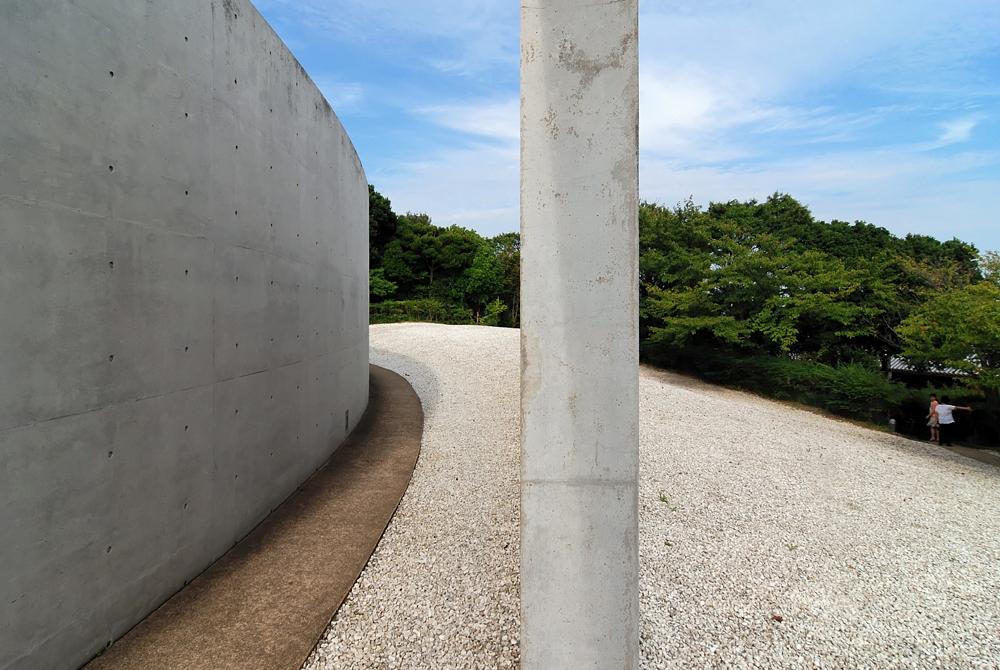
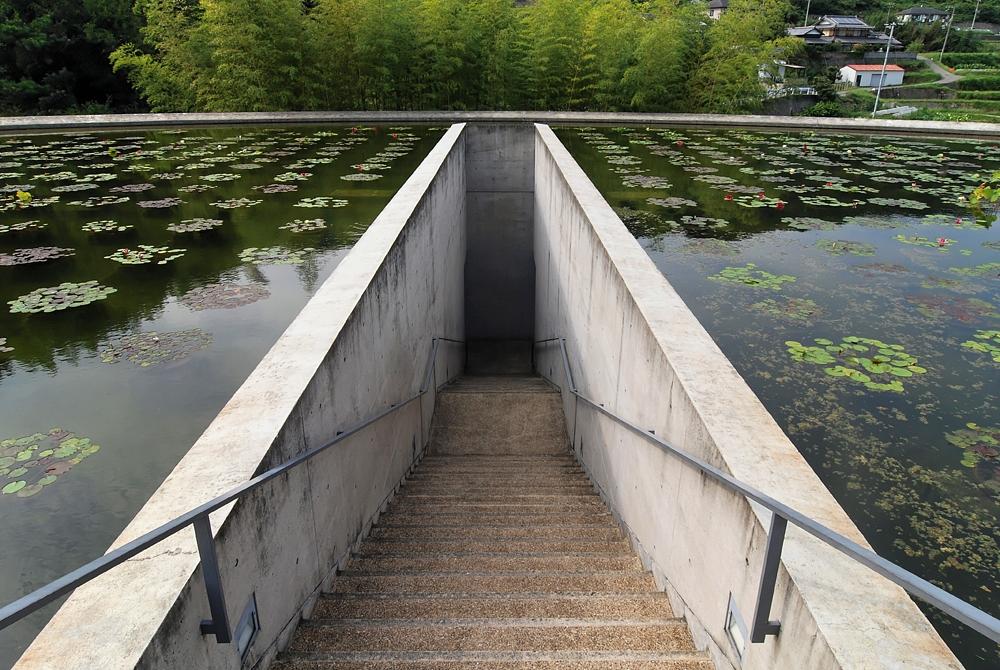
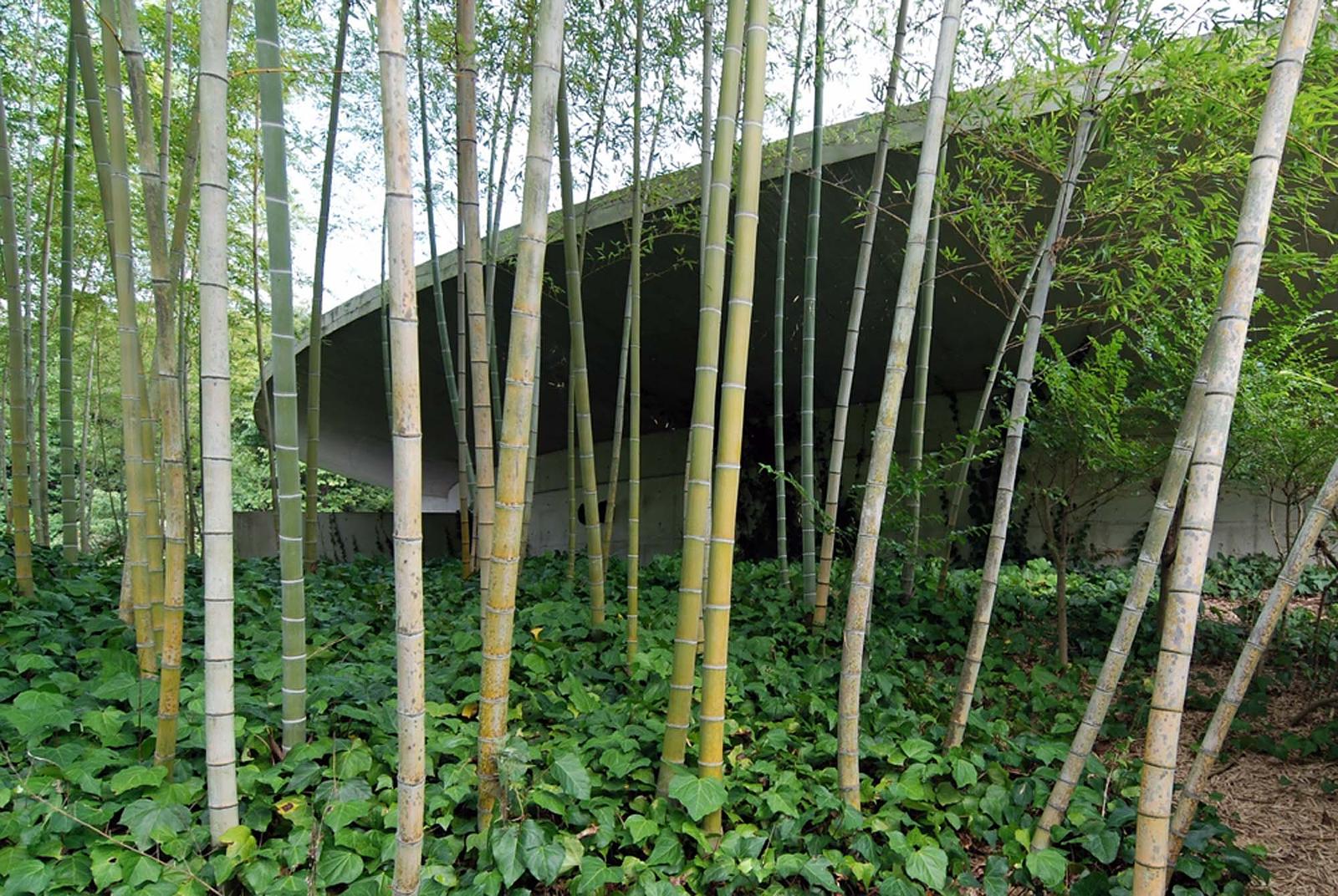
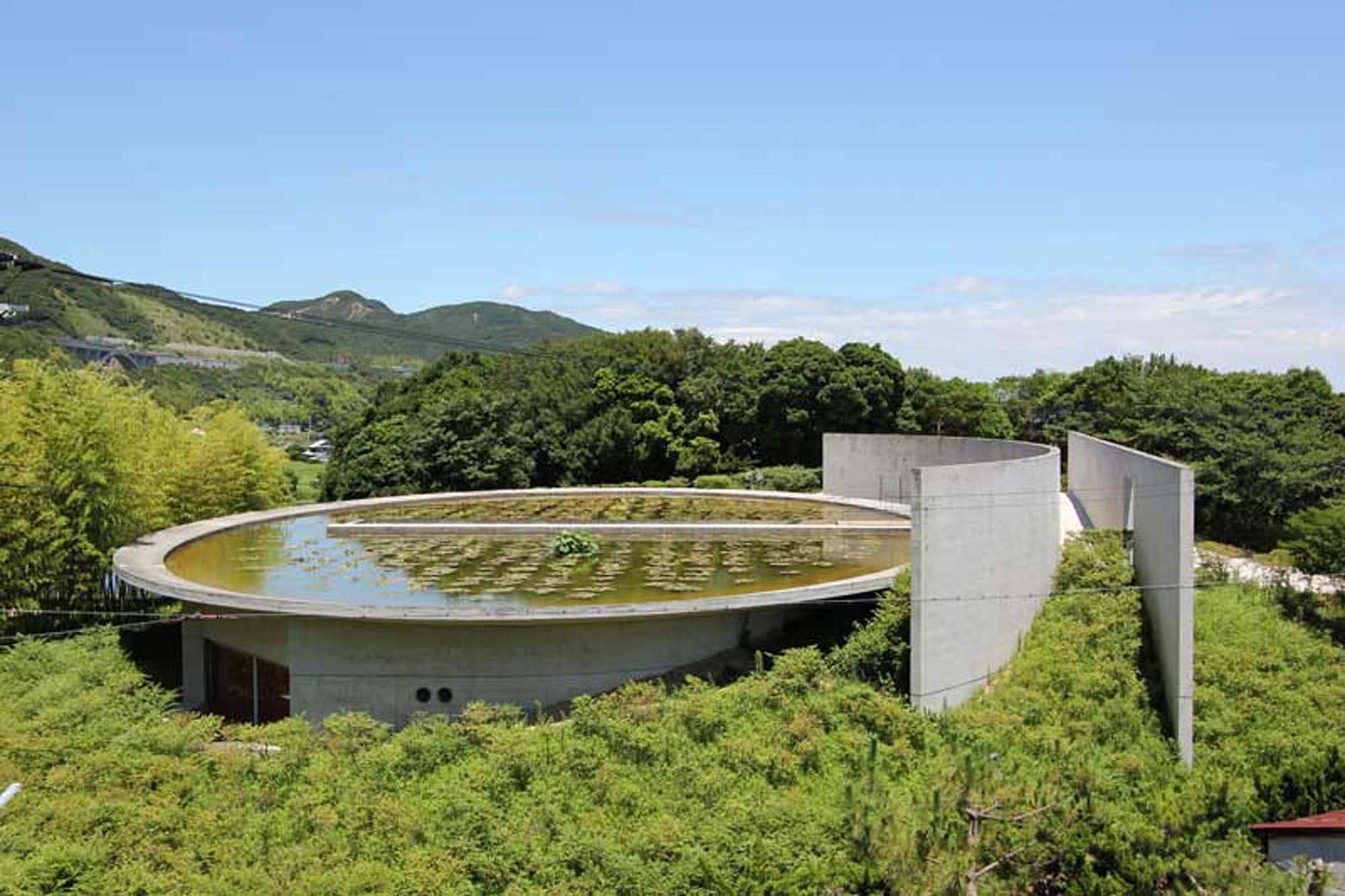
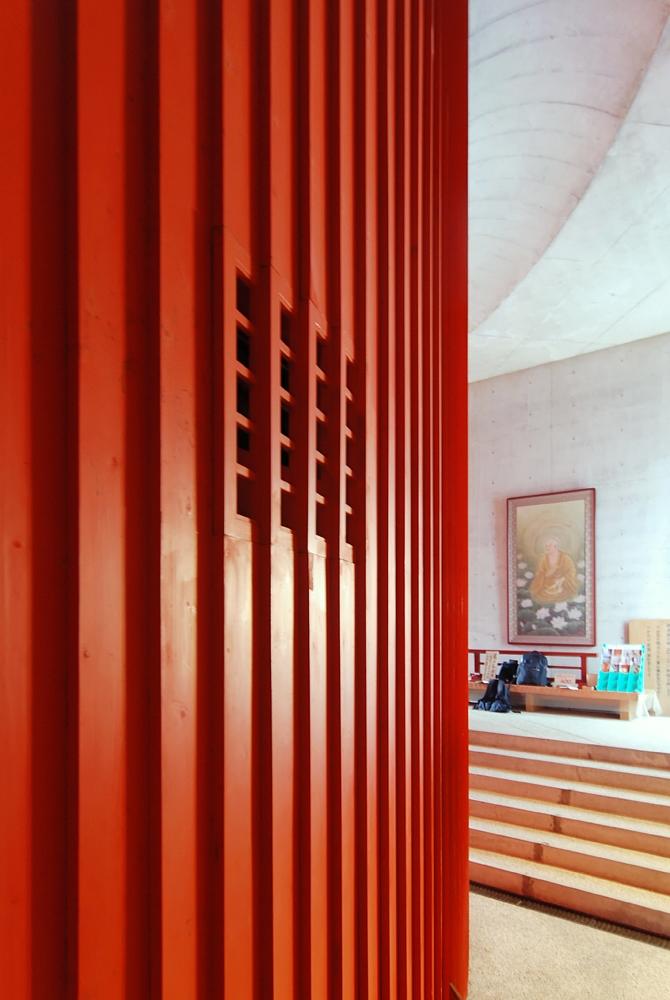
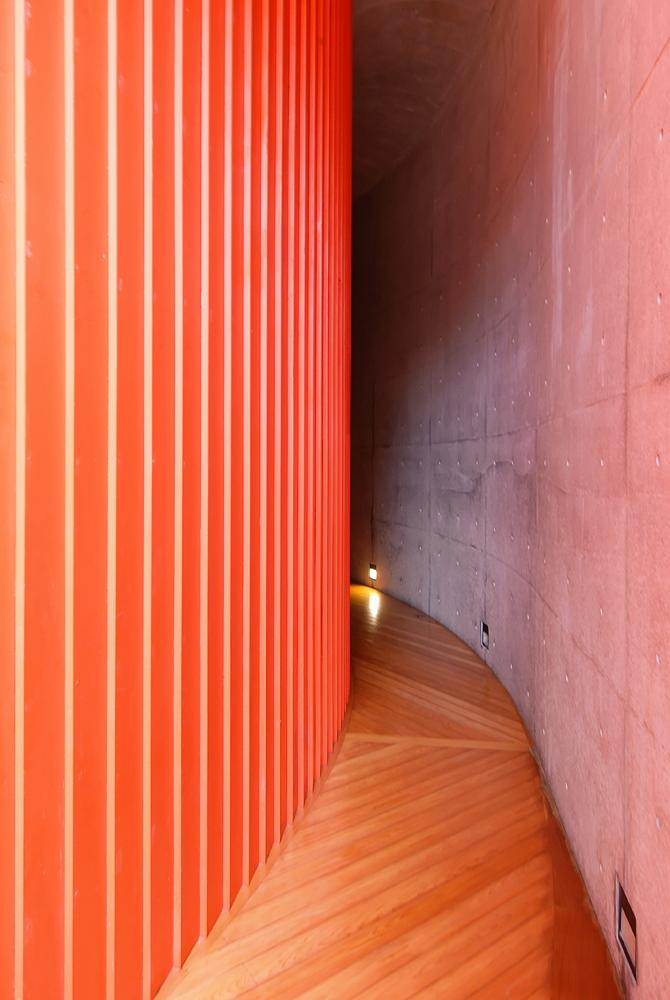
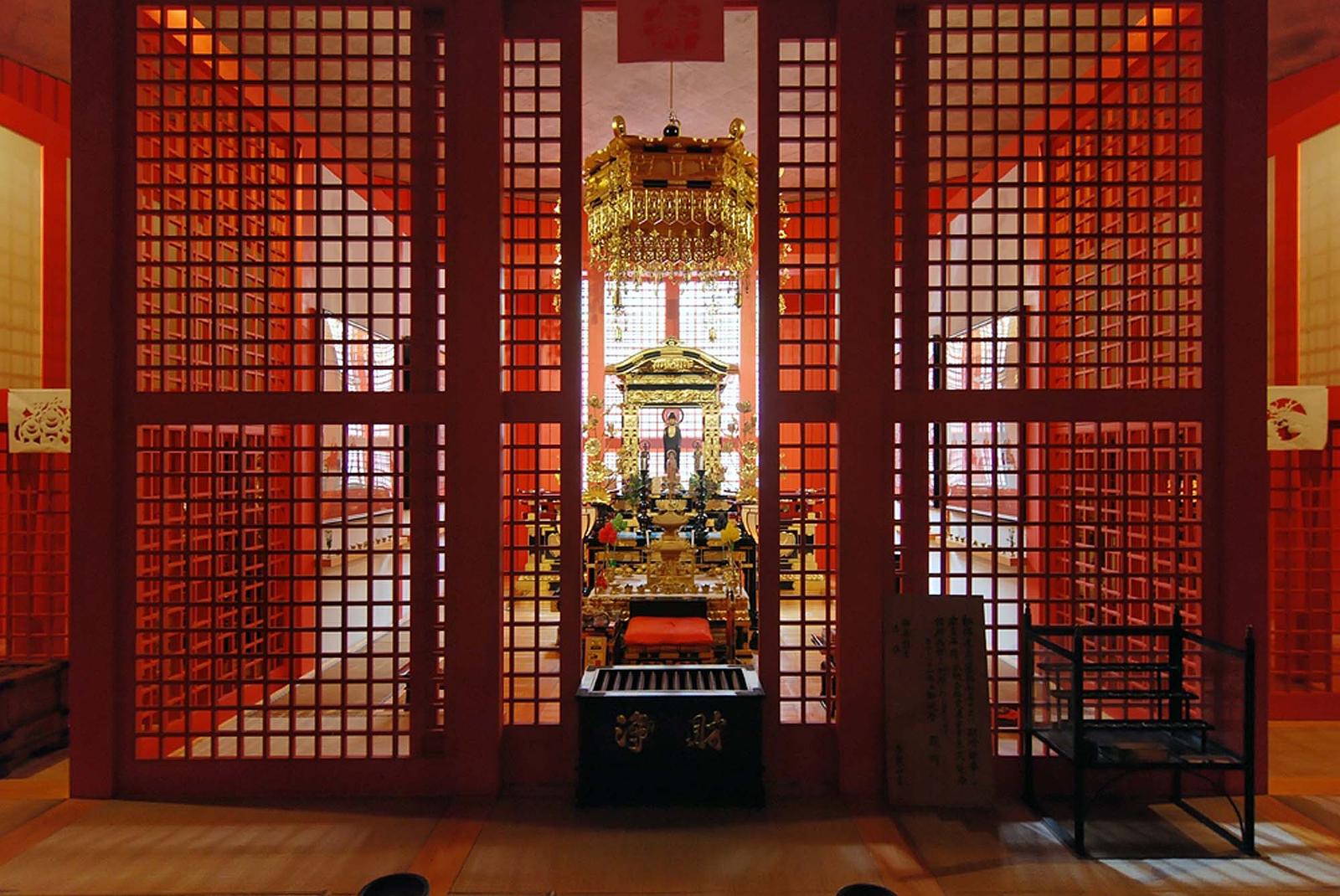
This is a destination that speaks first and foremost to those with an interest in modern architecture. Others may appreciate it, but the full impact reveals itself to visitors attuned to spatial design and material precision. On Awaji Island, Tadao Ando approaches the idea of a Buddhist temple with deliberate restraint. There is no visible sanctuary at first. Only an elongated oval pond planted with lotus flowers, perfectly proportioned and framed by low concrete edges. The geometry is exact, almost abstract, and already signals Ando’s discipline. The intervention appears only when you notice the incision. A straight concrete stair cuts through the pond, dividing the water with surgical precision. As you descend, the temperature drops, sound softens, and the light narrows. Ando controls the sequence tightly. The approach is not a prelude, it is the architecture. Below the pond, the main hall reveals itself as a circular volume finished in deep vermilion. The structure is simple yet highly calibrated. A concrete shell defines the space, while the red interior amplifies the filtered daylight entering from above. The contrast between the cool, pale concrete and the saturated inner chamber creates a tension that feels both physical and emotional. Completed in 1991 as part of the Honpukuji Shingon complex, the temple reflects Ando’s broader philosophy. Self taught and known for his obsessive control of formwork and light, he treats architecture as a sequence of controlled experiences. His signature concrete, poured to a near flawless smoothness with evenly spaced tie holes, acts as a neutral surface that allows light, water, and movement to define the space. Here, the lotus pond is not decorative. It conceals the building, sets the tone, and introduces a symbolic layer tied to Buddhist purity. The act of descending through it replaces the traditional temple gate. Ando removes the expected visual cues of sacred architecture and replaces them with a carefully staged transition. You arrive by losing orientation, then regain it in silence.
Contact
- Phone
- +81 799-74-3624
Location