
Luxor · Egypt · To discover
Luxor Temple
Luxor is ancient Egypt with the volume turned up. Not a single ruin, not a polite museum piece, but an entire ritual landscape split by the Nile. On the east bank, where the sun rises, stood the world of the living: temples, priests, processions and royal spectacle. On the west bank, where the sun sets behind the Theban cliffs, the pharaohs prepared for eternity with the seriousness of people who had very high standards for the afterlife.
Karnak is the place to begin. It was the great religious engine of Thebes, expanded over centuries by pharaohs who clearly understood the value of scale. Its Hypostyle Hall still feels almost unreasonable: 134 columns, once painted in vivid colour, rising like a stone forest built for gods with excellent spatial awareness. From here, during the Opet Festival, the sacred statues of Amun, Mut and Khonsu travelled in ceremonial barques toward Luxor Temple, along what is now the restored Avenue of Sphinxes. Imagine priests in linen, music, incense, crowds, banners, hidden divine statues and a pharaoh having his power ritually renewed. Religion, politics and theatre, all in one procession.
Luxor Temple is more elegant, more urban, and beautifully layered. Amenhotep III shaped much of it, Ramesses II added his grand court and statues, and later centuries left Roman traces and a mosque still active inside the temple precinct. It feels less like a dead monument than a building that kept being absorbed by the city around it.
Then you cross to the west bank and the mood changes completely. The Valley of the Kings hides its drama underground, in painted corridors made for the journey through death. Hatshepsut’s temple at Deir el Bahari does the opposite: terraces, colonnades and limestone cliffs arranged with such confidence that it still looks startlingly modern.
That is the magic of Luxor. You do not simply visit temples and tombs. You move through a complete ancient worldview: sunrise and sunset, power and death, ceremony and architecture, river and desert. Giza gives you the icon. Luxor gives you the civilization breathing behind it.
Good to know.
- Location
-
Luxor City, Luxor, Luxor Governorate 1362501, Egypt
Open map & directions ↗ - Contact
- egymonuments.gov.eg
A few places to make it your own.
To stay · Luxor
Al Moudira
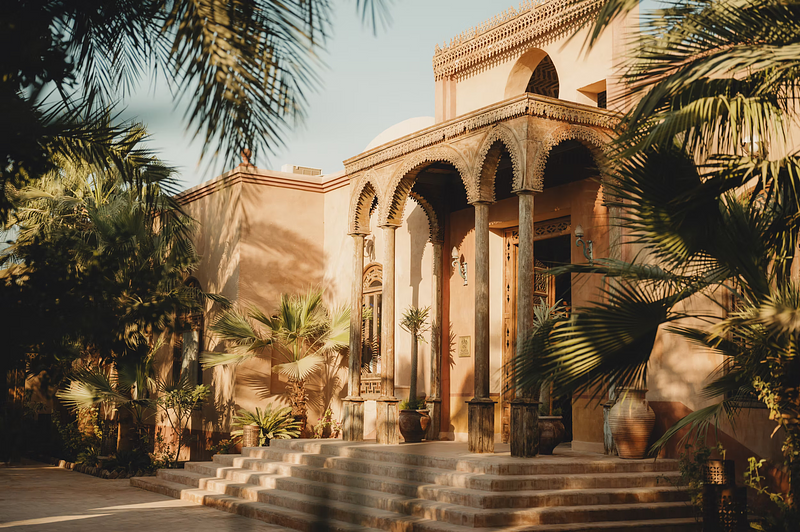
Al Moudira stands on Luxor’s west bank, on the side of the Nile the ancient Egyptians associated with the afterlife. Thousands of years ago pharaohs crossed to these hills for t...
Discover this place ↗